RED X
A closed lane, enforced
A red X or red flashing lights mean the lane is closed because people, stopped vehicles or other hazards are in it. You must not drive in it, and the police enforce closures.
Check a sign doodlesmart
Start
WHAT THE HIGHWAY CODE SAYS
Smart motorways use signs, not a fixed hard shoulder.
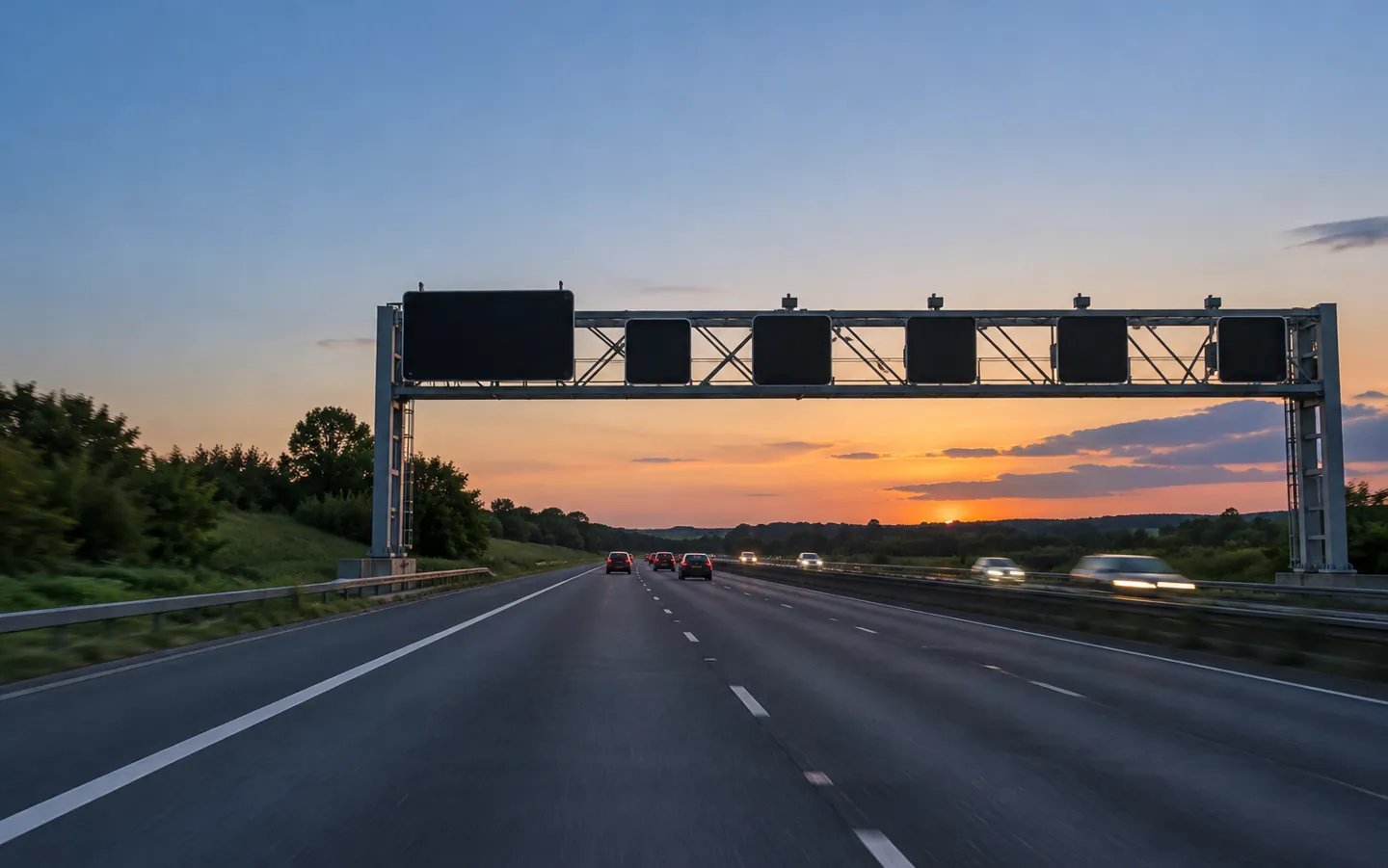
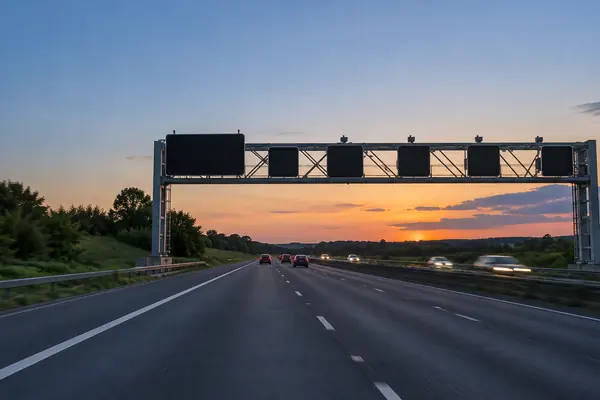
Overhead signs set the speed limit, close lanes with a red X and sometimes open the hard shoulder to traffic. Knowing what each signal means, and what to do if your car fails, makes these roads much less daunting.
RED Xmeans lane closed
Check a signKeep in mind
THE SHORT ANSWER
Smart motorways manage traffic with overhead signals.
Most of the rules are about reading them in time.
RED X
A red X or red flashing lights mean the lane is closed because people, stopped vehicles or other hazards are in it. You must not drive in it, and the police enforce closures.
Check a signEMERGENCY AREAS
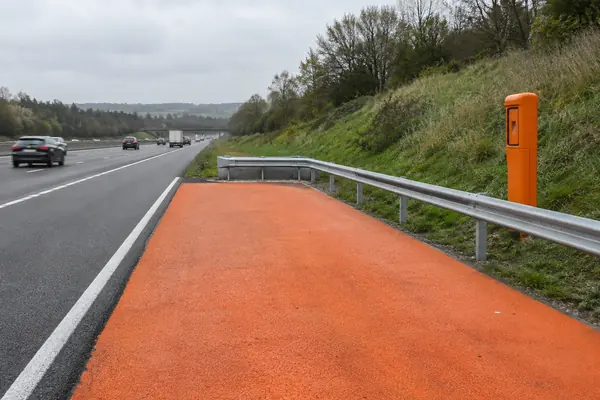
Where there is no hard shoulder, or it is used as a lane, emergency areas are provided. They must only be used in an emergency.
See the numbersBREAKDOWNS
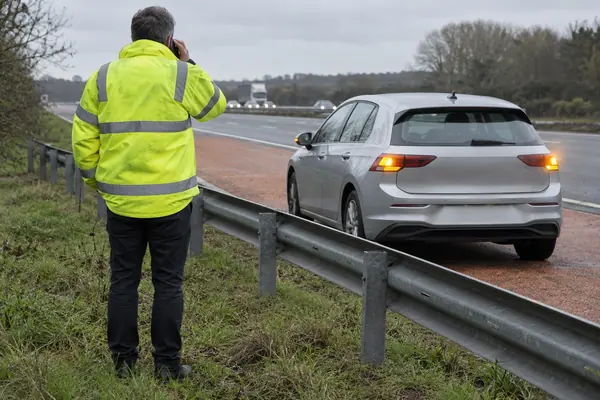
If your car develops a problem, try to leave at the next exit. If you cannot, move left and stop in an emergency area, lay-by or on the hard shoulder if you can.
The three stepsA QUICK SIGN CHECK
Pick a signal you might see above the motorway to see what the Highway Code says. The bar shows how strict the instruction is.
Based on Highway Code rules 257 to 270. Words in capitals in the Code, such as MUST and MUST NOT, mark legal requirements.
TWO NUMBERS WORTH KNOWING
One figure from National Highways on how common smart motorways are,
one on the extra places to stop added since 2023.
≈ 25%
Share of motorways that are smart
National Highways says around 25 per cent of the motorway network is now made up of smart motorways, so it is worth recognising their features.
NETWORK · NATIONAL HIGHWAYS
150+
Extra emergency areas installed
Work began in June 2023 to add over 150 more emergency areas to existing smart motorways, and was completed in April 2025. Plans for new smart motorways were cancelled in April 2023.
EMERGENCY AREAS · 2023–2025
The second figure is from Wikipedia's Smart motorway article, which cites National Highways. Smart motorways were first used in their full form on the M42 in the West Midlands in 2006.
NATIONAL HIGHWAYS' THREE STEPS
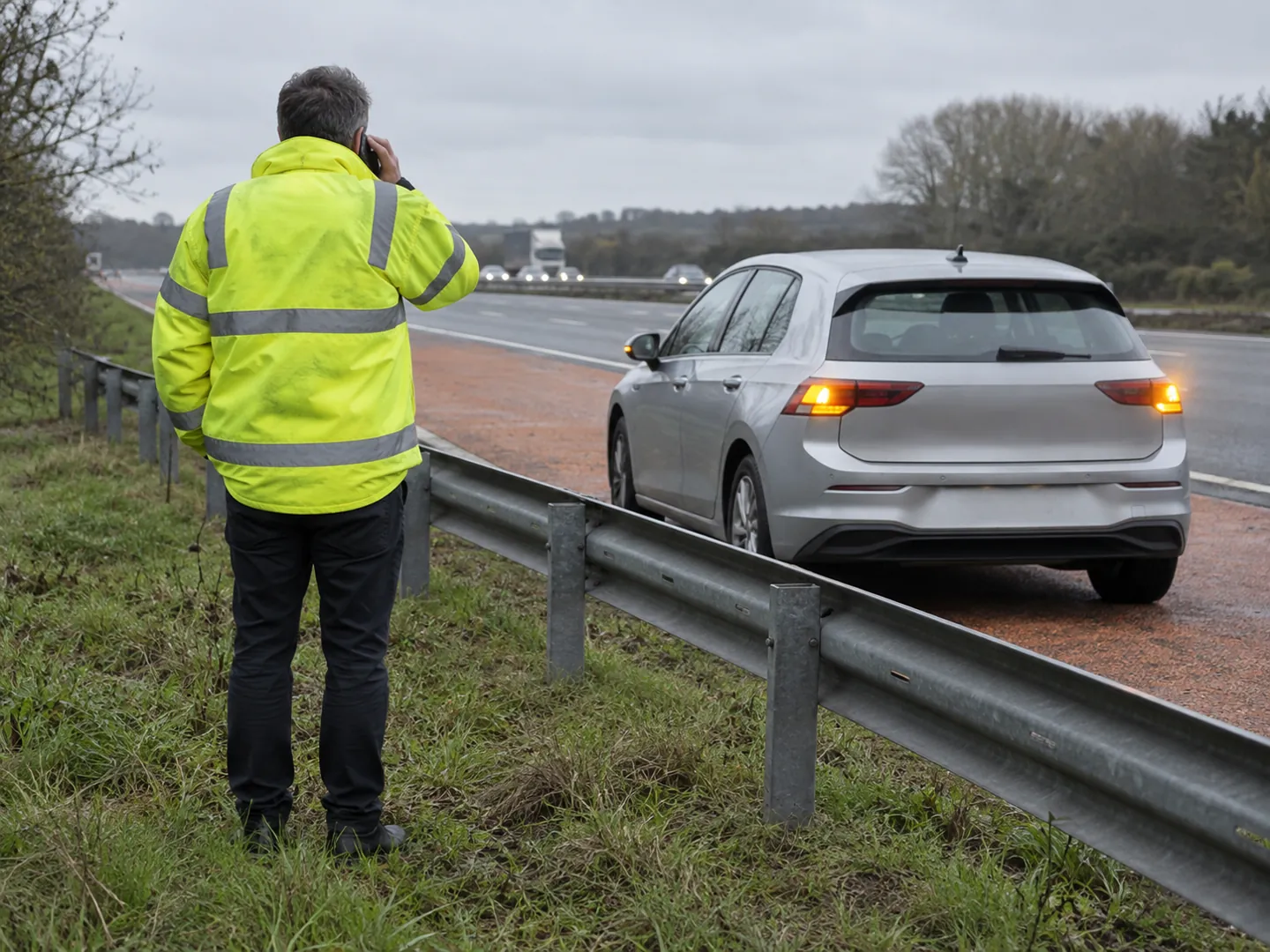
If a warning light comes on, leave at the next exit or pull into a service area if you can. If you cannot leave the carriageway, follow these steps.
Step 1
Move into the left lane and into an emergency area, lay-by or onto the hard shoulder if you can. Stop as far left as possible and switch on your hazard lights.
Step 2
Leave by the side away from traffic and wait behind the safety barrier if there is one. Do not go back to the car or try repairs.
Step 3
Stay in the car with seatbelts and hazard lights on, and call 999 for the police, or press your car's SOS button.
Step 4
Use the free emergency phone or call National Highways on 0300 123 5000, then your breakdown service. Speak to National Highways before leaving an emergency area.
LANE DISCIPLINE
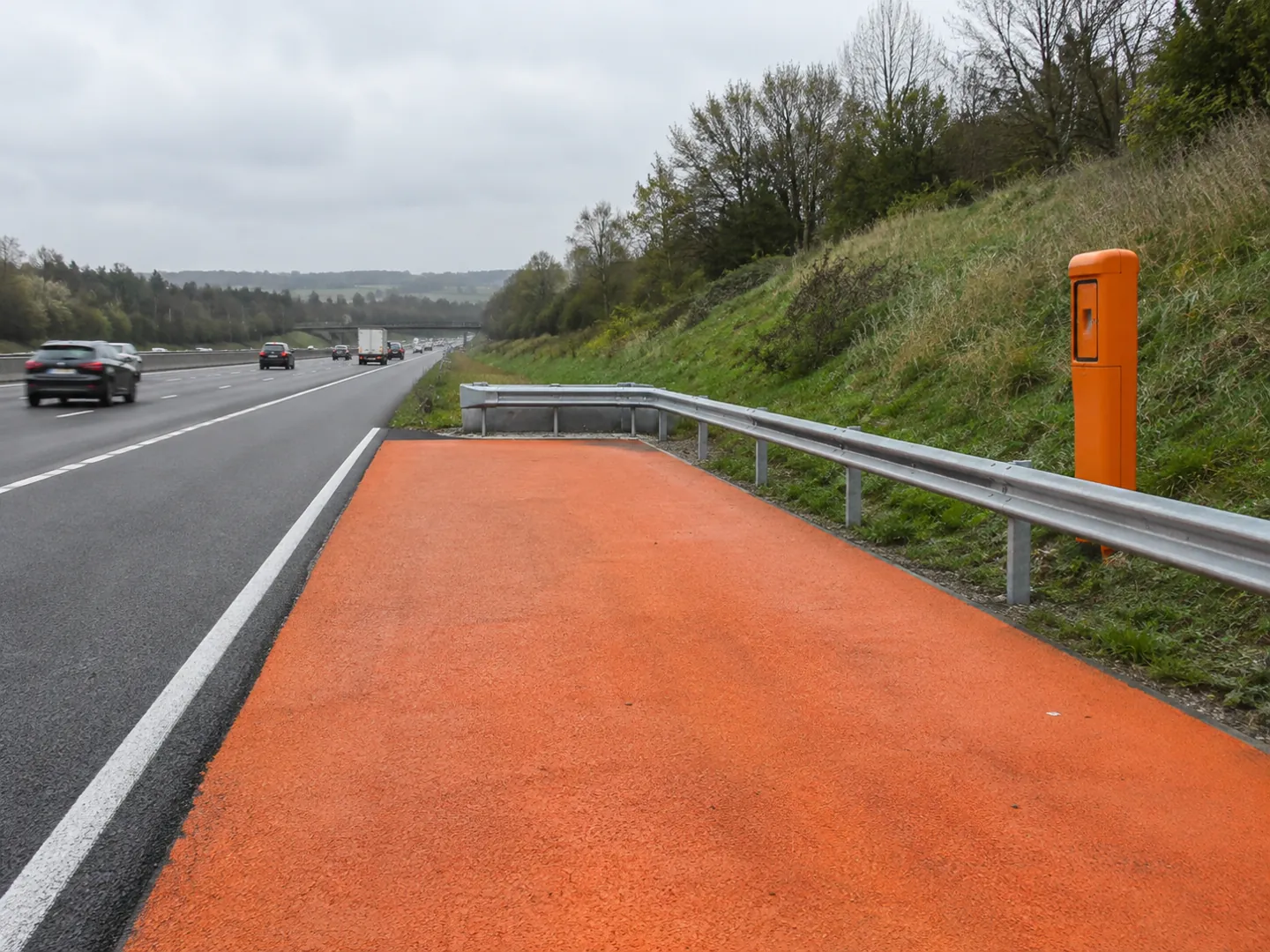
The Highway Code asks you to keep left unless overtaking, and to watch for emergency services, traffic officers, recovery workers and stopped vehicles on the hard shoulder or in an emergency area. If you are in the left lane and it is safe, move over to give them more space.
The Highway Code says the safest place to stop on a motorway is a service area, and that hard shoulders give less protection than lay-bys or emergency areas because they are so close to fast traffic. Never reverse along any part of a motorway: if you miss your exit, carry on to the next one.
Questions
It marks a closed lane where people, stopped vehicles or other hazards may be present. Under Highway Code rule 258 you must not drive in it, and lane closures are enforced by the police.
Only when a speed limit is shown above it. A red X or a blank sign above the hard shoulder means you must not use it except in an emergency.
A place to stop on motorways with no hard shoulder, or where the hard shoulder is used as a lane. It must only be used in an emergency. The Highway Code counts emergency areas, lay-bys and hard shoulders as places of relative safety.
If you cannot reach the left lane or a place of relative safety, stay in the vehicle with seatbelts and hazard lights on and call 999 for the police, or press your SOS button.
National Highways suggests your car's eCall SOS button, a mobile mapping app, or the numbers and letters on marker posts and driver location signs by the road.
Destination
ABOUT THIS NAME
doodlesmart.com is part of the DoodleSale portfolio. It isn't in an auction right now, but you can ask about leasing it.